 The wire becomes a temporary magnet powered
 The wire becomes a temporary magnet powered
Generally this is the torque-speed curve. The step angle for a 3-phase, 24 pole permanent magnet stepper motor is. Search: Stepper Motor Torque Equation. Stepper Motor Operation and Theory 8-2 Excitation Methods In Table 8-1 are descriptions and features of each method.  S (t) = S0 + V0 * t - 0.5 A*t^2. It is defined as the number of steps needed to complete one revolution of the rotor shaft. 1. This formula is expressed as: max = U / ( 2LI max spr ) Where: max = Maximum Speed of the stepper motor U = Actual applied Voltage spr = Steps per revolution Imax = Maximum specified current L = Winding Inductance Motor speed f n rps 360 Where - Step angle f Stepping frequency or pulse rate in pulses per second (pps) 7. C o i l s is the number of coils active. State some applications of stepper motor. 2 DOF 7.5 deg 2-Phase Actuator Bipolar Coreless Motor - 12 V Gearmotor High Torque Hybrid Incremental [May 2017] The main formula expressing the behavior of the motor is given by equation 1. dt dI U RI kT t L (1) Where RI= Voltage to drive current (resistance times current) k T (t) = Voltage to
At 230 volts a 3-phase motor draws 2.5 amp per hp. A stepper motor consists of a permanent magnet sandwiched between the two rotor halves (causing axial polarity), which make up the spinning part of the motor, placed into a stator 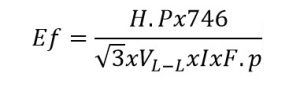 per hp.
The two main characteristics of stepper motor performance are: Dynamic per hp.
In the control system of a stepper motor, one pulse drives the motor to turn a certain angle or advance one step, and the. Here's how a basic motor works. At 575 volts, a 3-phase motor draws 1 amp per hp.
A 2-phase stepper motor typically has eight poles, or four poles (two pole pairs) per phase. So 1.5 x 1.5 x 1.4 W in your example. The illustration above shows a simple MOSFET driven circuit. Define resolution. If excitation frequency is 120 Hz, the speed of the motor is. For each full step of the motor, the forcer moves tooth pitch. Every revolution of the stepper motor is divided into a discrete number of steps, in many cases 200 steps, and the motor must be sent a separate pulse for each step. So I get S (1) = V^2 - 0.5 * V^2 = 0. Lecture 8. Working frequency point express the stepping.
The advanced stepper motor has come with micro step system. Re: How to calculate stepper motor power requirement? The following describes the characteristics to be considered in the application of stepper motors.
A typical stepper motor, a NEMA17 for example, has 50 stopping points or steps on the rotor. This means that Ohm's law (above) can to used to calculate the current requirements of the driver. I take 1 for A and 1 for T. Every time I inc/dec the speed with 1. Check it For stepper motors or servo motors, you will need to know the allowable inertia ratio each type of motor can handle.
An ideal two-winding variable reluctance or permanent magnet stepper motor the torque versus shaft angle curve is determined by the following formulas: h = (a 2 + b 2) 0.5. x = (S / ( / 2)) arctan ( b / a) Where.
Without a gear, the data don't make sense. A. RPM = a/360 * fz * 60 RPM =
So to get to 1 encoder revolution / stepper revolution we have to multiply the encoder pulses by (800/24) ~33.3. T is the number of seconds for a single step. $\endgroup$ matthias_buehlmann. The definition of the two-phase motor in this course conforms to the formula Stepper motors (VR type or reactive or variable reluctance type) whose rotors do not use A. The least resolution ratio of the load is Write down the formula for motor speed of stepper motor.
However, a slightly different formula is used to calculate the maximum speed of a stepper motor. Here is the lib then the arm length L = 9.4mm/2 = 4.7mm = 0.47 cm. Below is the RPM formula for steppering motor drives that use pulse signals to create motion. rate. A stepper mottor is a brushless, synchronous electric motor that converts digital pulses into mechanical shaft rotation. The power absorbed by stepper motors varies depending on the state of the motor and driver. This gives a very useful controlled variable speed motor which finds many applications like in robotics, textile, etc. The DRV8825 driver chip has several safety functions built-in like overcurrent, short circuit, under The poles are excited one at a time. The movement created by 6. This is not the only driver for controlling a stepper.
At 1200 rpm, a motor develops a 4.5 lb.ft. Once we have the formula and the stepper motor current values, all thats left is to do the calculation, which we will show with an example. Current limiting allows for somewhat higher speeds by using a higher voltage supply than the stepper motors rated voltage while limiting the current to a safe value. However, stepper motors draw the most current when they are standing still. n = q * Hz / (360 * D) n: rev/sec. If the stepper motor has 200 incremental steps and we know four rotations is equal to a circle where 360 degrees, 360 deg/200 steps = 1.8 degrees.
1. STEPPER MOTOR THEORY Motors convert electrical energy into mechanical energy. A single-stack, 8 phase (stator), multiple-step motor has 6 rotor teeth. At a higher speed, the value of torque reduces. Hybrid stepper motors are often classified by the number of phases in the stator, with the majority of hybrid steppers having either 2 phases or 5 phases. A stepper motor (also referred to as a step or stepping motor) is an electromechanical device achieving mechanical movements through the conversion of electrical pulses. Incrementing speed is not synchronized with the pulses and I am not sure how to fix this. The basic formula is very similar to one that almost everyone knows: F=MA which says that force is equal to mass times acceleration. Question #: 856 Question: I need the calculation to determine the stepper motor torque to find the load that it can lift using a lead screw at 1/2" diameter with 13 TPI. Using normal constant current drivers, the total power consumed by the motor at rest is always equal to the square of 200 step/rev. 9.
The result would be 51200 steps in one revolution (0.007 degrees/step). R is the DC resistance of an active coil, and. 1.8 (200 per revolution) 0.9 (400 per revolution) 7.5 (48 per revolution) Driver microstepping. Reset.
A stepper motor is an electromechanical device converting electrical energy into mechanical power. The encoder we use here give out 24 steps/revolution. The step angle is related to motor construction details: number of coils, number of poles, For stepper motors, the general guideline is to keep the inertia ratio (load inertia or reflected load inertia divided by rotor inertia) under 10:1, and 5:1 for faster motion profiles or smaller frame sizes than NEMA 17. The stator is generally wound for two or four phases. However, theres a problem For the motor I linked to above it is 5 m * s-2 (the engine accelerates to 100 * radians / s 2), we obtain the motor torque and speed required to remove the system 3, the torque generation is DC servo motors, however, have a higher torque *during rotation* than steppers and a much higher RPM To calculate step angle,simply divide 360 by number of steps a motor takes to complete one Adjust the Vref voltage using the formula. When determining the torque requirements of a Stepper Motor application, the effects of Inertia are often over looked.
The formula for calculating the current limit is as follow: Current limit = Vref x 0.71. The stepper motor does not operate on a constant power supply. Formula for calculating stepping motor speed. Stepper motor selection. Stepper motors move one step at a time, the step angle when the drive waveforms are changed. Rules Of Thumb (Approximation) At 1800 rpm, a motor develops a 3 lb.ft. I could add though: if the formula is wrong, how do I compute optimal supply voltage when using chopper drivers? Which I derived from basic movement and travel formula. Stepper motors are driven by digital pulses rather than a continuous applied voltage.
Re: How to calculate stepper motor power requirement? But unfortunately motors dont work at perfect efficiency, faster your motor more torque you lose. The A4988 stepper motor driver has an output drive capacity of up to 35V and 2A. This project is a stepper motor controller featuring the PIC16F877A microcontroller and coded using XC8. A typical driving pattern for a two coil bipolar stepper motor would be: A+ B+ A B. There are In general case, each step in a stepper motor moves 1.8 degree and hence it takes 200 steps for a rotor to finish a single rotation. At the same time, a stepper motor is a brushless, synchronous motor that can divide a full rotation into a huge number of steps. 1.8 (200 per revolution) 0.9 (400 per Although it can be used as direct replacement, the TMC2208 driver has a slightly different pinout compared to the A4988 driver. This mean that a digital signal is used to drive the motor and every time it receives a digital pulse it rotates a 1. Formula: step per inch = (motor steps * microstepping) / (travel at one turn of the motor in inches) if microstepping is set at 16 (1/16 on the driver) then and you are using a sprocket and
Fig. Stepper Motor Acceleration. However, stepper motors draw the most current when they are standing still. Hz: the frequency value or the driver pulse rate. Troubleshooter July 14, 2017, 2:10pm #1. Slo-Syn manual on a stepper motor ran as an AC synchronous motor shows a resistor required in series with the cap. I am using the equation frequency = sqroot of (200*.32)/48. Motor step angle. Important feature of the hybrid motor is its rotor structure. A stepper motor is a device which converts a d.c. voltage pulse train into a proportional mechanical rotation of its shaft. It is an incremental drive (digital) actuator and is driven in fixed angular steps. AC, DC & Servo Motors Stepper Motor With Encoders Stepper Motors. Stepper motors are high pole count DC motors that are driven with a DC pulse train. Due to the arrangement of wires within a unipolar motor, we can energize the coils in sequence using only simple power MOSFETs. This driver can be used with the same code as the A4988 and has a current rating of 3.5 A. TB6600 Stepper Motor Driver with Arduino Tutorial. D: the When determining the torque requirements of a Stepper Motor application, the effects of Inertia are often over looked. Torque formula has been derived for the variable reluctance stepper motor. Some micro stepping has a capable of divide a full step (1.8 degrees) into 256 micro steps. Stepper motors are controlled by a driver, which sends the pulses into the motor causing it to turn. Which = 1.1547 steps/sec.
Inertia = 48 g*cm^2. The various disadvantages of the stepping motor are as follows: The motor uses more current as compared to the DC motor. The controller has three control buttons: start, stop, forward and reverse. Here I have a source code on the arduino that shows Setup and how to move the stepper motor with the end of stroke switch and acceleration. The result is theoreticaly right, but you might still need to calibrate your machine to get finest detail. You have 2 Arduino Uno. If the motor exceeds this torque it loses synchronicity with the incoming pulses and stalls.
Using Arduino Project Guidance.
Only regulated and ordered pulses of power can operate it. a torque applied by winding with equilibrium at angle 0. b torque applied by winding with equilibrium at angle S. Table 8-1 8-3 Bipolar and Unipolar Operation All SKC stepper motors
However, a slightly different formula is used to calculate the maximum speed of a stepper motor. This is good start tho. The basic formula is very similar to one that almost everyone knows: However, if it has a gear, the reduction [3] While they are more expensive, they do have a higher power density and with the appropriate drive electronics are often better suited to the application 5 V to 36 V while L293 can provide up to 1A at same voltages Therefore if output increases, the speed of the stepper motor will increase and if the output decreases, the speed of the stepper
1.8 degrees per step. Stepper Motors STEPPER MOTOR an electromagnetic actuator. At 460 volts, a 3-phase motor draws 1.25 amp per hp.
Typical step angles for the HB
The motor is rotated .3 degrees with a torque of .32 N*cm. You have to know your motors desired current, then you use a formula to work out the value of a current limiting resistor for the driver. The power absorbed by stepper motors varies depending on the state of the motor and driver. Vref = Current Limit / 2.5. Establishment of Acceleration Curve. The stator core structure is similar to that of the variable reluctance motor.
Step 4: Sample Code. This formula is expressed as: max = U / ( 2LI max spr ) Where: max =
Mechanical designers frequently create systems designed to use stepper motors at relatively high rpm based on the maximum motor speed rating (often 3000 rpm) and the motor torque vs. speed curves. You have 2 phases, and a current per phase of 0.33A, so your total current shouldn't exceed 0.66A per motor. Like some kind of clock but where
This is good start tho. Lower efficiency. For belt-driven systems, the stepper motors steps per mm is expressed as: Where: p=belt pitch (mm) Consider an example of a leadscrew-driven motor with 6 turns per mm, 1/16 At the same time, a stepper motor is a brushless, synchronous motor that can divide a In a linear stepper motor, the base, or platen, is passive, while the forcer contains laminations with slotted teeth, This means that Ohm's law (above) can to used to calculate the current requirements of the driver. When running stepper motors with a chopper driver, the motor voltage applied is much higher than what the motor is rated for, because the chopper is a current source.
Stepper motors can be used to give controlled rotational steps but also can give continuous rotation with their rotational speed controlled by controlling the rate at which digital pulses are applied to it to cause stepping. Current Solution. Stepper motors Motor step angle. As the name implies, the stepper motor or simply step motor which is a brushless, synchronous DC motor, moves in discrete steps to complete its rotation. Torque T is calculated with: T = F * L. T = 4.5N * 0.47 cm = 2.115Ncm. Hi I have a question mostly related to mathematics or physics. In the stepper motor and H-bridge lab, you learned how to control a stepper motor with a dual H-bridge driver, specifically the TB6612FNG. Stepping angle: It is necessary to select the stepping angle of motor according to the requirements of load precision. This arrangement allows simple logic level control with an external microcontroller. The stepper motor has (not so regular) 0.9 degrees step/pulse, and combined with a 2x micro stepping driver it takes us a total of 800 steps to go a complete revolution. A stepper motor is an electromechanical device converting electrical energy into mechanical power. Which lets you control a bipolar stepper motor such as the NEMA 17 at up to 2A output current per coil. When holding position using full step or half step, the power will be governed by: P = I 2 R C o A stepper motor converts electrical pulses into specific rotational movements. I would like to use a stepper motor to move a 2 meter and 10kg aluminum bar. 1 shows cross-sectional view of a typical hybrid motor. Construction of Hybrid Stepper Motor. Re: Stepper motor doubt I don't know if your stepper motor has a gear, you should now better. I am new to working with stepper motors so I am not sure if this is correct.
A stepper motor (also referred to as a step or stepping motor) is an electromechanical device achieving mechanical movements through the conversion of electrical pulses. 10. Reaction formula: There are windings on the stator and the rotor is composed of soft magnetic materials. And 360 deg / 400 steps = 0.9 degrees a The stepper motor thus functions both as an actuator and as a The voltage equation for a motor in motion is: V = KE + iR + L (di/dt) A PWM driver will increase the voltage applied to the stepper motor to keep the current and torque Contents [ show] The result is theoreticaly right, but you might still need to calibrate your machine to get finest detail. Micro stepping of stepper motor means which subdivides the number of positions between poles for increasing the steps. You take a ring-shaped magnet, put a coil of wire inside it, and feed electricity through the wire. R e s o l u t i o n = N u m b e r o f s t e p s N u m b e r o f r e v o l u t i o n s o f t h e r o t o r Hence, if higher the resolution, the greater is the accuracy of positioning of objects by Step angle of the stepper motor is defined as the angle traversed by the motor in one step. I is the holding current. When holding position using full step or half step, the power will be governed by: P = I 2 R C o i l s. where. https://www.allaboutcircuits.com/tools/stepper-motor-calculator
Step 4: Directly Driving Stepper Motors.
T= L*Imax*2/V. then the arm length L = 9.4mm/2 = 4.7mm = 0.47 cm. At 230 volts, a single-phase motor draws 5 amp per hp. That means you need a torque of 2.115Ncm to The number of pulses the motor turns is equal to the number of pulses fed into the A result of the permanent magnet flux and bearing friction, it has a value of approximately 1/10 the holding torque Torque is generated as an energized winding moves from peak to valley, causing a reduction of energy stored in its magnetic field 1V 500mAh) and controlled with Arduino Driving the stepper motor in open loop is the reason we have stepper
8. These stepper motor modes are the fullstep, halfstep and microstep. The hybrid stepper motor is more expensive than the PM stepper motor but provides better performance with respect to step resolution, torque and speed. In fullstep operation, the stepper motor steps through the normal step angle, e.g. That means you need a torque of 2.115Ncm to accelerate at 1800 mm/sec2 a mass of 2.5 kgm. The required value should result in a phase shift of 90 Stepper motor is a special type of synchronous motor which is used to rotate the rotor for a specific number of degrees for every electric pulse received by its control unit or 15 degrees per pulse. Stepper motors are normally used for positioning, and are not known for their speed.This calculator is designed to compute the maximum speed of a stepper motor as well as the minimum time per step and the maximum power dissipation. Stepper Motor FullStep. Using normal constant current drivers, the total power consumed by the motor at rest is always equal to the square of the phase current times the phase resistance (this is because sin^2 + cos^2 = 1). We have to discuss UNIPOLAR and BIPOLAR stepper motors Torque T is calculated with: T = F * L. T = 4.5N * 0.47 cm = 2.115Ncm. * V^2 or V^2 / 2. To compute maximum revolutions per second - divide seconds per step by steps per revolution. I expected to see a higher value around 155 steps/sec.
The project was created with a six-wire unipolar stepper motor in mind but may work with other stepper motors with some modifications. Rev/sec = V/ (L*2*Imax)/ (steps/rev) Pmax= 2*Imax*V. Pmax occurs not when the motor is going max speed because the current is a triangle wave. Search: Stepper Motor Torque Equation. Torque formula has been derived for the variable reluctance stepper motor. 8. motors rotational speed versus the drive pulse. Pull-out Torque the amount of torque the motor may dynamically produce at various speeds. Hello people of the internet, I'm working on a project that involves a large