 The Marine Environment Protection Committee (MEPC) of the International Maritime Organization (IMO) had adopted amendments to the International Convention for the Control and Management of Ballast water can cause environmental and public health problems since it can contain sewage and toxic materials, in addition to endemic animal and plant species.
  close. The ballast water management standards are being phased in over a period of time. Air 2. Text by Devin Bartley. Ballast water can be taken on board or released when a vessel needs to be stabilized, like when cargo is unloaded or loaded at ports or there is bad weather. The ballast water includes bacteria, microbes, small invertebrates, eggs, cysts and larvae of various species. Ballastwater.JPG 512 384; 25 KB. Ballast Water | National Invasive Species Information Center First week only $4.99! In the specific field of ballast water treatment, radiation processing technology using electron beam accelerators offers an innovative solution for controlling conventional and emerging water pollution challenges without added chemicals. (4) To avoid doubt, ships that are excluded from the application of the Ballast Water Management Convention under Article 3(2)(b) and (d) of the Convention are ships that only operate in Singapore waters, or that only operate in Singapore waters and on the high seas, unless the Director determines that the discharge of ballast water from such ships would In the final step, the filtered and UV-treated water goes to the ballast tanks. Any ship using ballast water exchange must do so at a minimum 95% efficiency and at the standards of agreed number of organisms per unit volume. Section 15 CFR 754.2 (j) (1) (iii) requires a mandatory program of deep water ballast exchange unless doing so would endanger the safety of the vessel or crew. Ballast water from different areas may be carried and discharged into the local environment causing large scale impact and massive loss of biodiversity due to invasive species being transported through the ballast water. The communication contained guidelines as part of a regional strategy on ships ballast water management and invasive
  Get Customized Market Research Report Now! EPA ballast water proposal fails to protect the Great Lakes from invasive species guest post by Nick Schroeck. P. Senthil Kumar, in Modern Treatment Strategies for Marine Pollution, 2021. They have projected that about 30% of the vessels on international voyages will reach their mandatory compliance dates in 2022. The Pollution of Ships' Ballast Water to the Marine Environment and Countermeasures. Entry into force: 8 September 2017. the uptake or discharge of ballast water for the purpose of avoiding or minimising pollution incidents from the ship; the uptake and subsequent discharge on the high seas of the same ballast water; or , , 131 157 . Abstract. Carrier of Pathogens. 49: 313-318 Water pollution: An Introduction Over two thirds of Earths surface is covered by water; less than a third is taken up by land. learn. Ships regularly discharge dozens of different waste streams, from ballast water teaming with invasive species to nutrient-laden greywater from ship laundries. USA:+1 917 267 7384 IN:+91 777 709 3097 [emailprotected] Get Discount. The First Schedule to the Prevention of Pollution of the Sea (Ballast Water Management) Regulations 2017 (G.N.
  Over the past two decades, ships ballast water has been recognised as one of the major vectors for the introduction of harmful aquatic organisms and pathogens into the marine environment and the introduction of invasive species was recognised as one of the four biggest threats to the marine environment. Ballast water allows vessels to operate safely. Airborne PM can result from direct emissions of particles (primary PM) or from the condensation of certain gases ( d) This subpart does not authorize the discharge of oil or noxious liquid substances (NLS) in a manner prohibited by United States or international laws or regulations. Pollut. S 504/2017) is amended ( a ) by deleting subparagraph .1 of paragraph 1 of regulation E1 and substituting the following subparagraph: Introduction. Ballast Water Impacts. Issues Fact Sheets. 1) It is necessary increase the detailed environmental Land ballast water reception centers. 4th International Conference on Machinery, Materials and Computing Technology. Regulations of the Ballast Water Treatment Convention (BWTC) will enter into full force on September 8, 2017, and require that all ships are equipped with a water ballast treatment system.The IMO (International Maritime Organization), a division of the United Nations, is empowered with the task of providing regulation to all Cross section of ship diagram view, with marine debris contamination releases indicated. Zoological pollution is becoming an increasing concern for commercial shipping worldwide. Circular Economy: Exploring the Possibility of a World Without Trash (Tradebe Company) to receive ballast water from a tanker in Gijon. Unmanaged ballast water released in foreign ports could potentially introduce a range of invasive marine species. Ballast water transport is considered as one of the major vectors for dispersal of microplastics around the global oceans. Water Pollution: Cause # 12. Amendments to the Prevention of Pollution of the Sea (Ballast Water Management) Regulations (Amendment) come into force on 1 June 2022. comprehensive marine pollution legislation, and in particular the model Marine Pollution Prevention Act prepared by SPC and SPREP, and last revised in 2002. Amendments to the Prevention of Pollution of the Sea (Ballast Water Management) Regulations (Amendment) come into force on 1 June 2022. The ballast water management plan is an operational tool ship operators must develop, implement, and keep on board to meet the Ballast Water Management Conventions requirements. Ballast water sampling as a critical component of biological invasions risk management. Ballast water is water taken on board by vessels to maintain stability and trim. created standards for ballast water management. The volume of ships' ballast water is depending on design, size, and stability of a ship (1). A screening chamber (with stainless ste
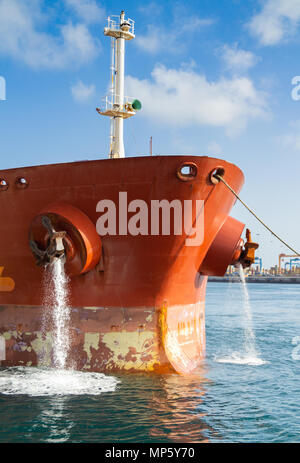
Study Resources. Stopping Ballast Water. The invasive species disrupt the food chain, foul beaches and damage infrastructurecosting citizens, industry and businesses at least $200 million per year. Reg. Decision IG.19/11: Regional strategy on ships ballast water management in the Mediterranean 16th Ordinary Meeting of the Contracting Parties to the Barcelona Convention Marrakesh, Morocco, 3 - 5 November 2009. Share sensitive information only on official, secure websites. Current ballast water treatment systems work in this way: Seawater pumped into the ships hull gets filtered through a screen to remove small organisms and particles. Hundreds of examples of major ecological, economic and human health impacts have been witnessed across the globe. Mobile sources at ports release pollutants including particulate matter particulate matterRefers to small particles in the air that can be measured to determine air quality and potential health impacts. Disposal of ballast water in the harbor is prohibited, but violations may occur. Published: 3 July 2018. Ballast waters: pollution and invasive species. Current ballast water treatment systems work in this way: Seawater pumped into the ships hull gets filtered through a screen to remove small organisms and particles. Zoological pollution is becoming an increasing concern for commercial shipping worldwide. It outlines the actions to take and the procedures to follow by the ships crew to ensure the safe management of ballast water. 1 World inventory of fisheries. The plan also need to be approved from a recognized organization or classification society. Decision IG.19/11: Regional strategy on ships ballast water management in the Mediterranean 16th Ordinary Meeting of the Contracting Parties to the Barcelona Convention Marrakesh, Morocco, 3 - 5 November 2009. The Ballast Water Management Convention requires all ships in international trade to manage their ballast water and sediments, according to a ship-specific ballast water management plan. 15.7.3.3 Other possible discharges. Taking into account the difficulties found in conducting a safe and efficient ballast water exchange in the waters between China and South Korea, the maritime safety administration of China has issued a notice (Marine anti-pollution Decree [2019] No. More than 185 aquatic invasive species have entered the Great Lakes, including zebra mussels and quagga mussels. About the Ballast Water Management Strategy. It is even feared that cholera may be transported in ballast water. The main technology for electrolysis will be helpful in disinfecting the ballast water which would result in reduced water pollution and prevent microorganisms from developing in In this commentary, a simple, inexpensive solution has been proposed to reduce microplastic pollution and its mobility via ballast water. Ballast water is used to maintain safe operating conditions throughout a voyage. The Associations local correspondents in Ukraine, Dias Marine Consulting PC, have advised that, in accordance with Ukrainian law, where pollution is noted or suspected, the Ukrainian Ecological Authorities will arrange for an inspection of the ship and determination of the cause of Mar. It is also controlled through national regulations, which may be separate from the Convention, such as in the Unite Ships regularly discharge dozens of different waste streams, from ballast water teaming with invasive species to nutrient-laden greywater from ship laundries. The water adds weight so the vessel floats at the right depth and stays level and stable. The Ballast Water Management Convention is a key international measure for environmental protection that aims to stop the spread of potentially invasive aquatic species in ships' ballast water. Bull. Results for package services with ballast water treatment solutions for ship owners applications from leading brands. Marine Pollution. To target the introduction and spread of aquatic nuisance species, USCG issued a final rule for standards for living organisms in ships ballast water discharged into waters of the United States, effective on June 21, 2012 (77 Fed. The discharge of ballast water and sediments by ships is governed globally under the Ballast Water Management Convention, since its entry into force in September 2017. Ballast Water Treatment Regulated The oceans are vast covering approximately 71% of the earth's surface. write. The convention internationally claimed for the control and management of Ships Ballast Water and Sediments, 2004 (B.W.M Convention), entered into force globally on September 8, 2017. vessels become a vector for the transfer of organisms from one part of the world to another. Marine Pollution (Ballast Water Control) Act 2013. The workshop will provide information on the Compliance, Monitoring and Enforcement (CME) aspects of Port State Control- Ballast Water Management as well as assist in strengthening the national capacity for flag state control. Nederlands: Principe van the vervuiling van de zee door ballastwater IMO Circular Letter BWM.02/Circ.35: Harmonized voluntary arrangements for ballast water management in the Mediterranean region Compare and contact a supplier near Ireland 17254) . Water pollution from industrial, agricultural, and domestic activities causes deterioration of the ecological balance and threatens many living species, and it is recognized that the ballast water of maritime vessels poses a major threat to the environment due to the transportation of invasive marine species into new environments (AAPA, 2008; Annex-VII: International Convention for Preventing Pollution from Ballast Water through Ships. ( d) This subpart does not authorize the discharge of oil or noxious liquid substances (NLS) in a manner prohibited by United States or international laws or regulations. Ballast Water Management systems must be approved by the Administration in accordance with IMO Guidelines (Regulation D-3 Approval requirements for Ballast Water Management systems). David, M. and Perkovic, M. 2004. Marine bio-invasions Ships use ballast water to provide stability and manoeuvrability during a voyage. Ballast water can contain thousands of aquatic microbes, plants and animals, which can be spread across the globe as the vessel releases ballast water. The purpose of the Ballast Water Management System is to minimize the transfer of Non-indigenous harmful aquatic organisms and pathogens from one area to another (arrival port) through the ship's ballast water system. tutor. Share sensitive information only on official, secure websites. Relevant to the conservation of biodiversity and the protection of habitats and species. Ballast water managing Convention. The Ballast Water Management Officer must maintain up to date records of all Ballast Water operations. Uninstall: ballast pump will hold ballast water directly to the yard. By volume, the ocean makes up 99 percent of the planet's living space--the largest space in our universe known to be inhabited by living organisms. IMO Circular Letter BWM.02/Circ.35: Harmonized voluntary arrangements for ballast water management in the Mediterranean region arrow_forward. A Water Ballast Treatment System is Compulsory. No. Ballast water is essential for safe and efficient modern shipping operations. Prevention of Pollution of the Sea (Ballast Water Management) Regulations 2017. This. The other hazardous factors added to the ballast water concern and its volume is the number of arrived ships to harbors and also ecosystem similarity of departure harbor and arrival port (2). Ballast water is pumped in to maintain safe operating conditions throughout a voyage. Media in category "Ballast water" The following 22 files are in this category, out of 22 total. Start your trial now! Since the introduction of steel-hulled vessels, water has been used as ballast to stabilize vessels at sea.
The potential of sea water ballast to carry non-native organisms from far away countries poses a very real threat and the control measures that have been put in place to date just arent enough, Tom informed us. In a sense, our oceans, rivers, and other inland waters are being squeezed by human activitiesnot so they [] When such water is discharged into the water body, it may result in large scale pollution of water body. New ships must meet the ballast water treatment standard. Then the water is UV-treated to kill all organisms that might have slipped through the filter. Global Ship Ballast Water Systems Market Research Reports With Industry Trends, Forecasts & Analysis By Top Publishers In USA, UK, India And Other Major Countries. Developments relating to ballast water discharge and anthropogenic noise pollution are reported in paragraphs 131 and 157 of the present report. Adoption: 13 February 2004. Munjed A. Maraqa, Saed Al Awadi, in Pollution Assessment for Sustainable Practices in Applied Sciences and Engineering, 2021. Since the emergence of humanity, the marine environment has provided a safety net in many ways, has fostered socioeconomic development, creating links between states, between cont Ballast water en.svg 512 402; 27 KB. Invasive aquatic species discharged through ballast water is a serious problem faced in the marine environment. Section 15 CFR 754.2 (j) (1) (iii) requires a mandatory program of deep water ballast exchange unless doing so would endanger the safety of the vessel or crew. 1. How nuclear pollution affects the ocean waters, the environment, and humans. In light of the marine pollution and disruption resulting from invasive species, amendments to an international treaty aiming to prevent the spread of potentially invasive species in ships ballast water entered into force on 13 October 2019.. Then the water is UV-treated to kill all organisms that might have slipped through the filter. Ballast Water Discharges of Invasive Species. Ballast water discharges by ships can have a negative impact on the marine environment. USCG Final Rule. Ballast water could be a major source of exotic plankton species (Drake et al., 2007), which may result in the In San Francisco Bay, Asian clams called Potamocorbula amurensis, also introduced by ballast water (waste water). UKRAINE: BALLAST WATER AND POLLUTION. Other Forms of Pollution: Heat or thermal pollution from factories and power plants also causes problems in rivers. Managing ballast water.
A locked padlock) or https:// means youve safely connected to the .gov website. study resourcesexpand_more. Ballast is water brought on board to manage the ship's weight. Ballast is water brought on board to manage the ship's weight. The Marine Environment Protection Committee (MEPC) of the International Maritime Organization (IMO) had adopted amendments to the International Convention for the Control and Management of The seas are abundant with diverse life ranging from the giant to the microscopic and beyond. This year, 2022, will be a peak season for BWTS installations, according to the leading classification society, DNV1. In 2015, the NWF and National Resources Defense Council won a federal appellate decision that forced the EPA to rewrite its general ballast water permit by 2018 to strengthen pollution controls. Invasive marine species are one of the four greatest threats to the world's oceans. The introduction of invasive marine species into new environments by ships' ballast water attached to ships' hulls and via other vectors has been identified as one of the four greatest threats to the world's oceans. Ballast water is the key element in keeping a ship stable and seaworthy. The potential of sea water ballast to carry non-native organisms from far away countries poses a very real threat and the control measures that have been put in place to date just arent enough, Tom informed us. practice reduces stress on the hull, provides transver se stability, improves propulsion and. Ballast Water Management. researches for each marine area to assess the pollution level in every area and to locate the These solutions proposal can be applied to older vessels affected and dangerous areas and also to locate the operating in the sea flying the Saudi flag. Examples of water pollution from businesses include: wastewater like sewage and industrial waste impacting water quality; dairy farms washing pesticides, fertilisers and animal manure into waterways; stormwater washing car oil, dust and building site sediment into drains; ship ballast water contaminating the sea. Being an Act - (a) to prevent, reduce and control the introduction of harmful aquatic organisms and pathogens to Papua New Guinea waters via ships' ballast water and sediments; and (b) to incorporate into the law of Papua New Guinea relevant provisions of the International The US EPA has proposed a Vessel General Permit to address ballast water discharges, a significant source of invasive species in the Great Lakes. English: Diagram showing the water pollution of the seas from untreated ballast water discharges.